Keeping classrooms healthy: a cleaning primer
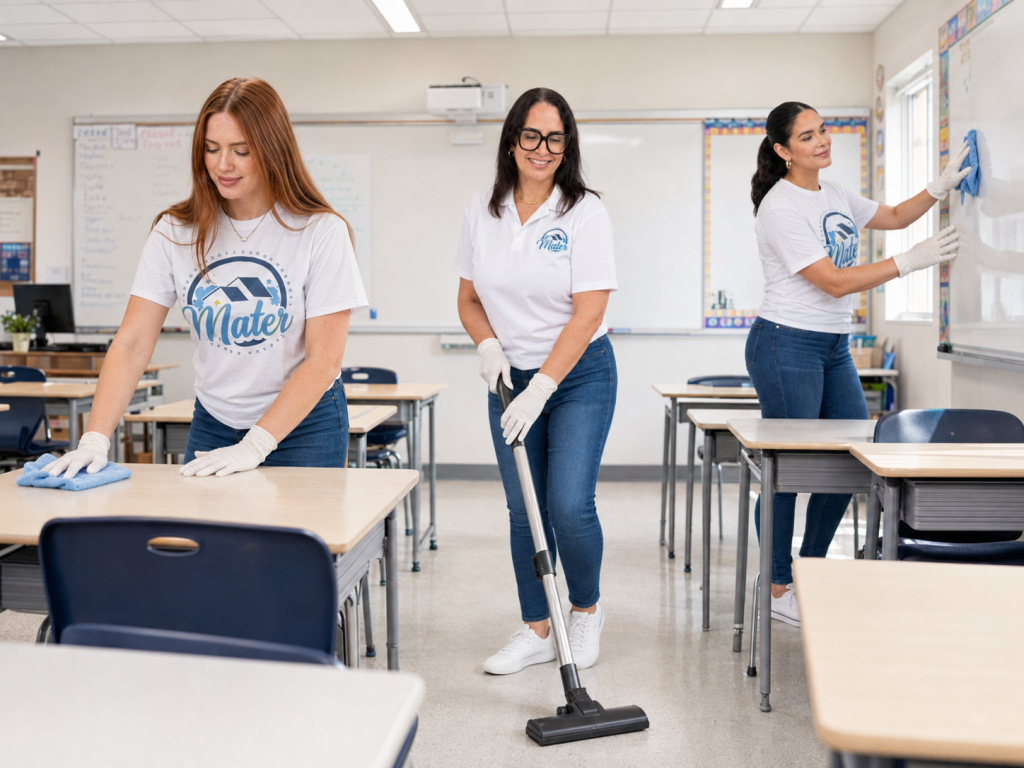
A classroom concentrates a large number of people into a small space and then asks them to share every surface in it. Cleaning it well is less about how hard surfaces are scrubbed and more about which surfaces are touched, and in what order they are dealt with.
Cleaning and disinfecting are two different jobs
Cleaning removes soil. Disinfecting reduces microorganisms on a surface that is already clean. Disinfectant applied over dirt is largely wasted, because the soil shields what is underneath it. Clean first, then disinfect, and give the disinfectant the contact time printed on the label.
The high-touch list
- Door handles, push plates and light switches
- Desk and table tops, and the chair backs pupils pull out
- Shared keyboards, mice, tablets and interactive board frames
- Taps, soap dispensers and paper towel levers
- Handrails, locker handles and pencil sharpeners
A routine that fits a school day
High-touch points during the day, when rooms are briefly empty. Full surface clean and floors after hours. Deeper work, vents, high-level dust, carpet extraction, during holidays when rooms can be taken out of use without disrupting anyone.
Ventilation is part of cleaning
Air movement matters as much as surfaces in a room holding thirty people. Keep vents unobstructed, vacuum the covers rather than dusting them, and check that anything blocking a return has not been quietly stacked in front of it.
Store products where they belong
In any setting with children, chemicals live in a locked store and are never left on a trolley in an occupied room. It is a small operational habit that removes an entire category of risk.